
Instagram Automation and Rules: What You Need to Know to Avoid Bans
Instagram is a powerful platform for individuals and businesses alike, helping them reach a global audience, engage with their followers, and promote their products and services. To streamline processes and enhance productivity, many users have turned to automation tools. These tools can help schedule posts, interact with followers, and even analyze performance. However, as beneficial as automation can be, Instagram has strict rules regarding its use, and violating these rules can lead to bans or restrictions. Understanding these guidelines is crucial for any Instagram user looking to harness the power of automation without jeopardizing their account.
What Is Instagram Automation?
Instagram automation refers to the use of software or tools to manage certain tasks on the platform without manual intervention. Automation tools are commonly used for:
- Scheduling posts: Automatically publishing posts at pre-defined times.
- Engaging with followers: Liking, commenting, and following/unfollowing users based on specific criteria.
- Content curation: Finding relevant content to repost or engage with.
- Analytics and reporting: Monitoring account performance, engagement metrics, and follower growth.
While these tasks can save time and improve consistency, they can also lead to issues if not used in accordance with Instagram’s rules.
Instagram’s Automation Rules and Guidelines
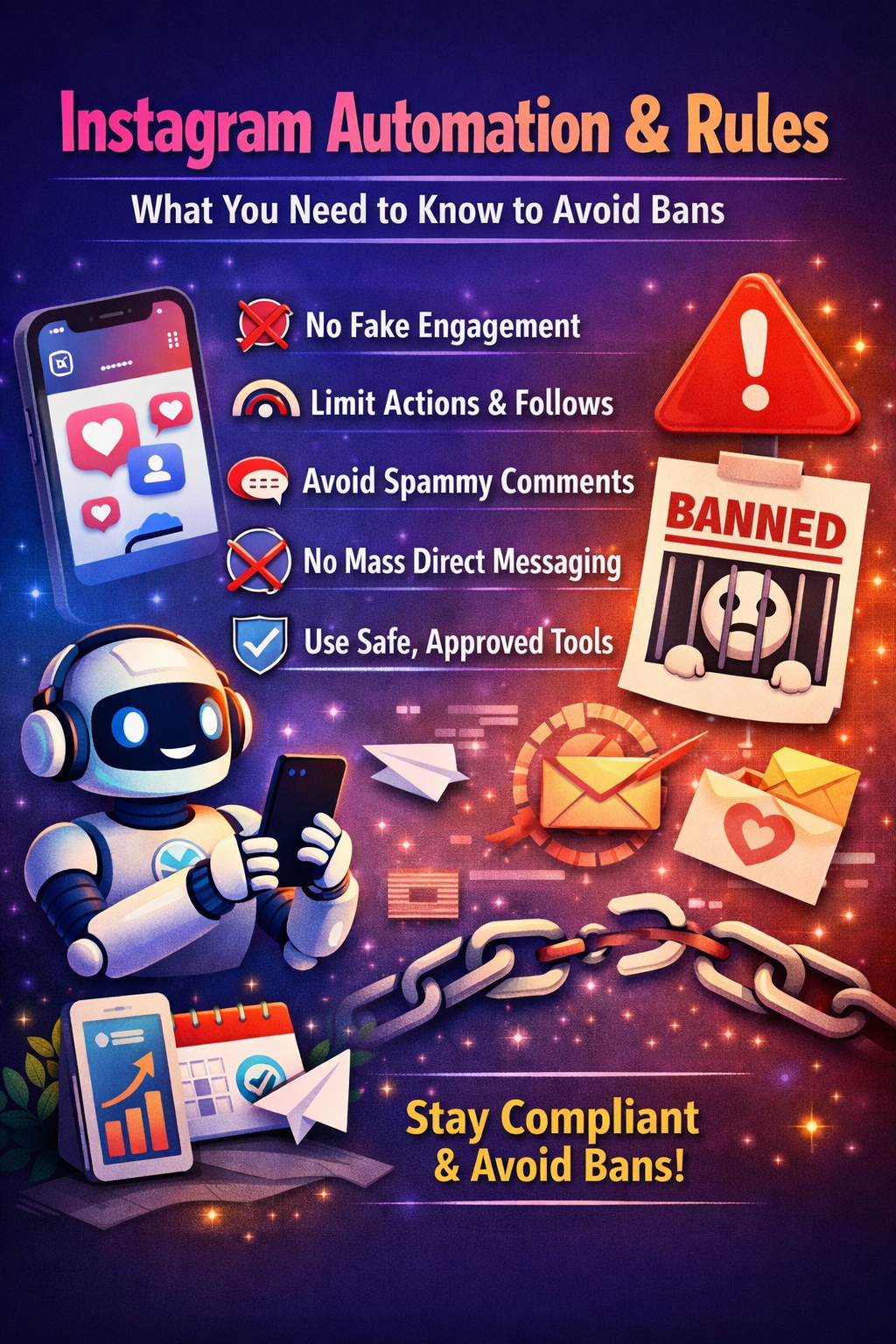
Instagram’s rules regarding automation are clear and are primarily designed to prevent spam, ensure genuine engagement, and maintain the quality of the platform. Violating these guidelines can result in penalties such as account suspension, reduced reach, or even a permanent ban. Below are the most important rules that users need to be aware of:
1. No Use of Bots for Fake Engagement
One of the most significant violations of Instagram’s terms of service is the use of bots or automated services to generate fake engagement. This includes automated likes, comments, follows, and unfollows. Bots designed to like posts, comment on random photos, or follow/unfollow users indiscriminately are seen as spammy practices.
Instagram’s algorithm is designed to identify and block accounts that use such automation tactics. If caught, the user may face a warning, temporary suspension, or even a complete ban.
2. Restrictions on Excessive Actions
Instagram’s guidelines explicitly restrict excessive use of automation tools. Performing too many actions in a short period of time (such as following/unfollowing hundreds of accounts per hour, or liking an overwhelming number of posts in a short window) can trigger Instagram’s spam filters.
To avoid this, it is essential to limit the number of actions per day. Most automation tools allow users to set limits for actions like follows, unfollows, and likes to mimic human behavior more closely. Overusing these features or engaging in behavior that Instagram deems suspicious will lead to account penalties.
3. Avoid Repetitive or Generic Comments
Automated commenting systems are common, but Instagram actively monitors them. If your automated comments are generic, repetitive, or spammy, Instagram may label your account as a bot. Automated systems that comment on posts with generic phrases such as “Great post!” or “Nice pic!” can be flagged as spam.
Instead of relying on generic comments, it’s recommended to create thoughtful, personalized comments that reflect genuine interaction with the content.
4. Instagram’s API Restrictions
Instagram provides an official API (Application Programming Interface) for developers to build tools that interact with the platform. However, the platform places strict limitations on the usage of this API. Third-party automation tools that do not comply with Instagram’s official guidelines and API restrictions are often blacklisted.
Using unauthorized tools can result in account bans, as Instagram prioritizes maintaining control over interactions on the platform.
5. Avoid Automated Direct Messaging
Sending bulk direct messages (DMs) through automation is another violation of Instagram’s terms. While some businesses use automated DMs for marketing purposes, Instagram views this as intrusive and spammy behavior. Sending unsolicited DMs to a large number of users can trigger warnings, account limits, or even account bans.
It’s crucial to remember that Instagram is a social network, and automation should be used to enhance relationships, not to harass or annoy users. Engaging in personal conversations with real followers should be prioritized over bulk messaging.
Best Practices for Instagram Automation
To avoid penalties, here are some best practices for using automation tools responsibly on Instagram:
1. Use Trusted Automation Tools
Ensure that the automation tools you use are trusted, comply with Instagram’s API guidelines, and follow ethical practices. Avoid using services that promise quick results with dubious methods like fake followers or engagement.
2. Set Action Limits
Always set realistic action limits on your automation tool to ensure it mimics natural human behavior. For example, limit the number of follows, likes, and comments to avoid excessive activity. Typically, a safe number of actions ranges from 50 to 100 per day, depending on your account’s activity level.
3. Monitor and Adjust Your Automation Strategy
Constantly monitor your automation activities and be prepared to adjust your strategy based on Instagram’s feedback. If you receive warnings or encounter any issues, reduce your automation activities and reassess your approach.
4. Engage in Genuine Interactions
While automation tools can handle some tasks, nothing beats genuine interaction with your followers. Respond to comments, direct messages, and engage with your audience in a meaningful way. Instagram values authentic connections and engagement, which will help your account stay safe from penalties.
5. Avoid Cross-Platform Automation
Avoid using the same automation tools across multiple platforms, like Twitter or Facebook, to interact with Instagram. This is often seen as spammy and can violate Instagram’s cross-platform restrictions. Stick to tools designed specifically for Instagram to reduce the risk of a ban.
How to Handle Instagram Warnings and Penalties
If you receive a warning or penalty from Instagram due to automation, it’s essential to act quickly and responsibly. Here’s what you can do:
1. Cease Automated Activities Immediately
If Instagram alerts you that your account is engaging in suspicious activity, stop using automation tools for a while. This will prevent further penalties and show Instagram that you are not attempting to circumvent its rules.
2. Appeal to Instagram
If you believe you were wrongfully penalized, you can appeal the decision by contacting Instagram’s support team. Explain your situation and demonstrate that you understand the rules and are committed to following them moving forward.
3. Clean Up Your Account
Ensure that your account is free of spammy comments, likes, or follows. Remove any automated or bulk content that may have triggered the penalty. This includes removing any bots or unauthorized tools you may have been using.
4. Be Patient
If your account has been temporarily banned, it’s important to be patient. In most cases, Instagram will lift the ban after a period of time if the account has shown improvements in behavior. Avoid attempting to bypass the ban by creating new accounts or using questionable tools, as this can lead to a permanent ban.
Conclusion
Instagram automation can be an invaluable tool for users who want to enhance their presence on the platform and engage more effectively with their audience. However, it’s crucial to use these tools responsibly and in line with Instagram’s guidelines. By understanding and following the platform’s rules, you can avoid penalties and maintain a successful and sustainable Instagram strategy.
Avoiding spammy behavior, adhering to API restrictions, and focusing on genuine engagement are the keys to using automation safely. By keeping these best practices in mind, you can ensure that your Instagram automation efforts will lead to long-term success, not a ban.
